Why Installation Timelines Can Change, Even When You’re Ready for Installation
The week that you have been preparing for is finally here! You’ve signed all the paperwork, prepped your site, and cleared your schedule. But…
Read article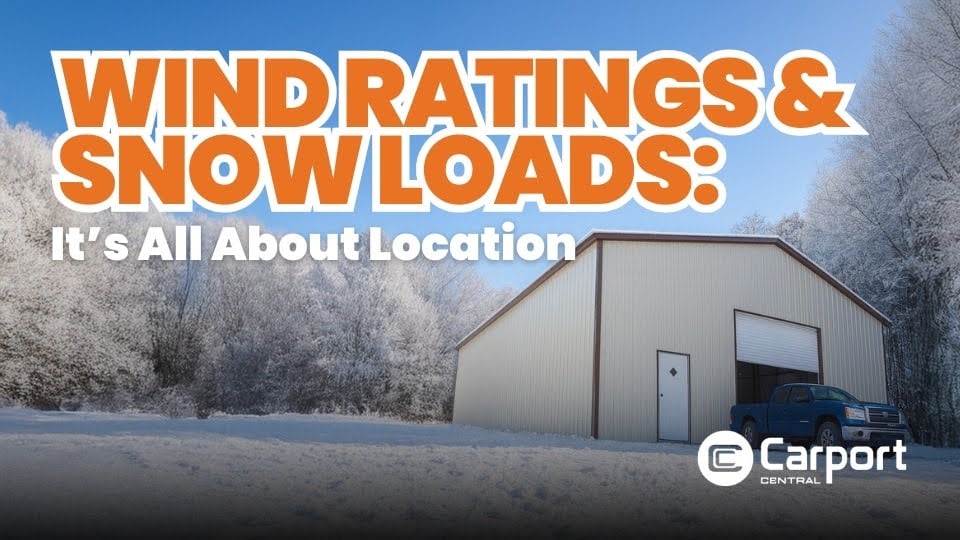
Getting the right metal building solution is about more than just choosing a design and picking out some colors you like. It’s also about ensuring your structure is engineered to endure the specific weather challenges of your installation location.
What are we talking about? Local wind gust ratings and snow load requirements.
What are wind loads?
A quality-made metal structure should be able to withstand the force of a specified wind gust blowing in from any direction. To that end, most municipalities and counties have set minimum wind speed ratings as part of their local building code. It should be noted that these wind ratings are measured in miles per hour (mph) for a 3-second gust only and are not intended to account for sustained wind speeds.
The minimum wind load ratings can vary widely across different regions of the country, depending on typical weather threats and local topography. Metal buildings designed to withstand higher wind speeds may include thicker-gauge framing, additional bracing and reinforcements, and/or longer anchors. These upgrades help protect your structure and ensure it remains properly anchored during strong storms or high wind events.
What is snow load?
A typical snowflake only weighs between 4 and 20 milligrams. That may seem like nothing, but once enough flakes get together, snow can get pretty heavy. Many assume that snow load simply refers to the amount of snow a roof can handle, but local building officials actually use ground snow load as their starting point.
Ground snow load measures how much snow tends to accumulate in a particular region, denoted by pounds per square foot (psf). Roof snow load (the extra weight of snow a roof can safely support) is also measured in psf, but varies based on roof material, pitch, and insulation. For example, a steeper roof sheds snow more easily than a flatter roof, so two buildings in the same area can have very different roof snow load ratings.
Building codes often set minimum requirements for both ground snow load and roof snow load. To meet higher snow load ratings, metal buildings may include thicker-gauge framing, tighter frame spacing, stronger truss systems, and/or other reinforcements. These design elements help ensure your structure can safely withstand specified snow loads without structural damage or failure.
Why location matters
Building requirements vary depending on where the structure will be installed and how it will be used. Local codes consider factors such as regional weather patterns, historical wind speeds, snow accumulation levels, and local safety regulations.
Because that’s true, a building designed for one location may not meet the requirements of another area. Your building should be engineered specifically for the needs of your installation location.
How wind and snow load requirements affect building price
Higher load requirements may increase a building’s cost because the locally approved plan may call for more framing material and additional engineering specifications. These upgrades are ultimately designed to protect your investment and ensure the building performs safely over time.
The Bottom Line
When you choose to partner with Carport Central, rest assured that your building will be engineered to meet or exceed all local wind and snow load requirements. And if you happen to be in a seismic zone, we also factor seismic load requirements into our plans for your safety and peace of mind.
Got more questions about wind ratings and snow loads? Ready to get your custom metal building project started? We’re here to help you make it happen! Reach out to us online, or connect with one of our building experts even faster by calling (980) 321-9898 today.
Get a custom price in minutes, or talk directly with a building specialist.
The week that you have been preparing for is finally here! You’ve signed all the paperwork, prepped your site, and cleared your schedule. But…
Read articleYou’ve purchased your metal building, now you’re stuck thinking, “What happens now?” Trust me when I say, you aren’t the only one that feels…
Read articleChoosing the right style for your metal building starts with understanding your unique needs and requirements. Since different building styles serve different purposes, consider…
Read article
Get answers from a building specialist about Wind Ratings & Snow Loads: It’s All About Location, plus a free quote for your size, options, and location.





Building Experts
P.S. - There's usually 2-3 ways to get the same building for less. Most people just don't know what questions to ask. We'll tell you what they are.
By calling, you agree we may return your call or text about your quote.
 No Payments, No Interest for 12 Months